

Montessu Necropolis: archaeology and wild landscapes in Sulcis Iglesiente
Discovering the Montessu Necropolis in Villaperuccio: a journey through archaeology and landscapes
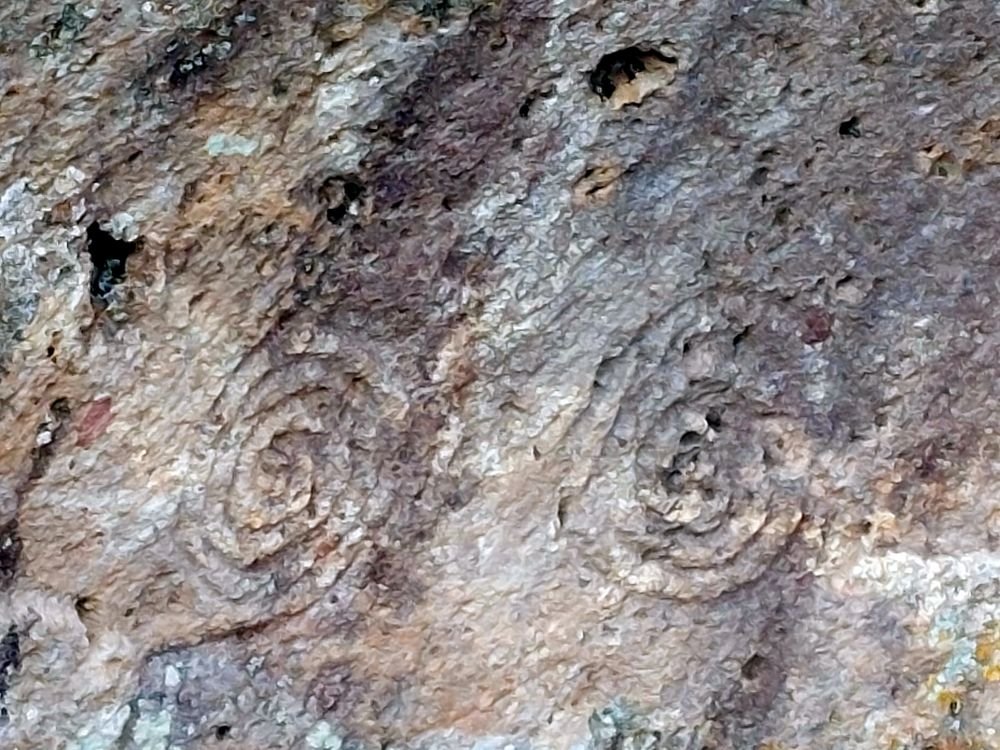
Inscriptions found in the Montessu necropolis. (photo: La Pintadera Sarda)
An ideal excursion for anyone visiting Sardinia who wants to discover the most authentic and ancient side of Sulcis Iglesiente. Staying at La Pintadera Sarda in Carbonia, you can quickly reach one of the most important Pre-Nuragic complexes in Southern Sardinia, a UNESCO World Heritage site: the Montessu Necropolis, in the municipality of Villaperuccio.
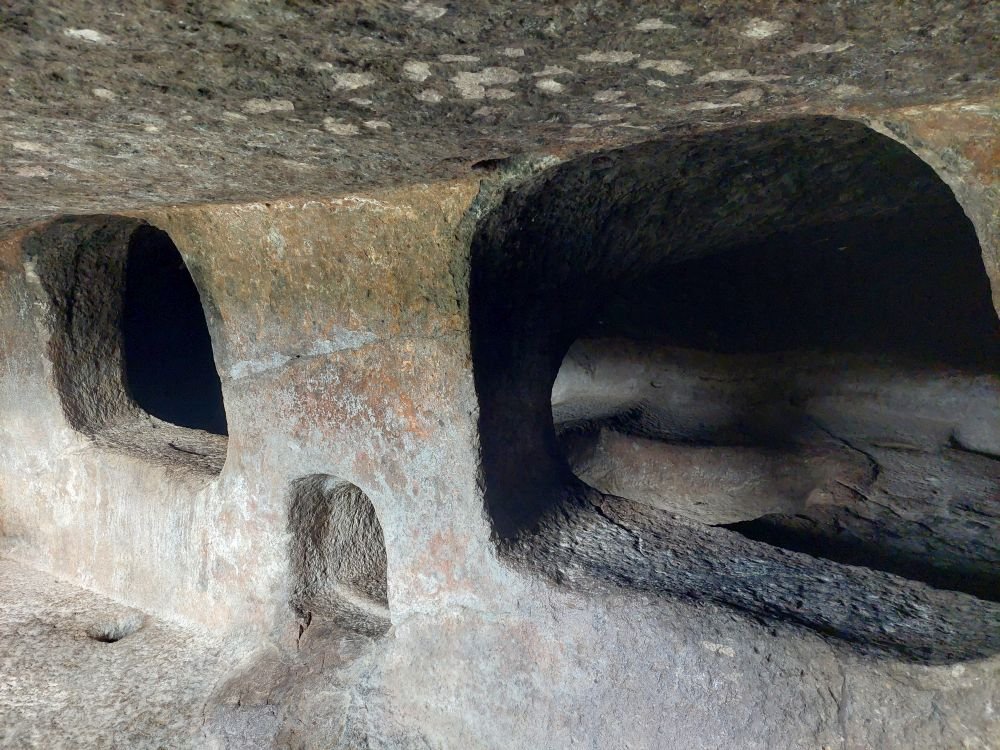
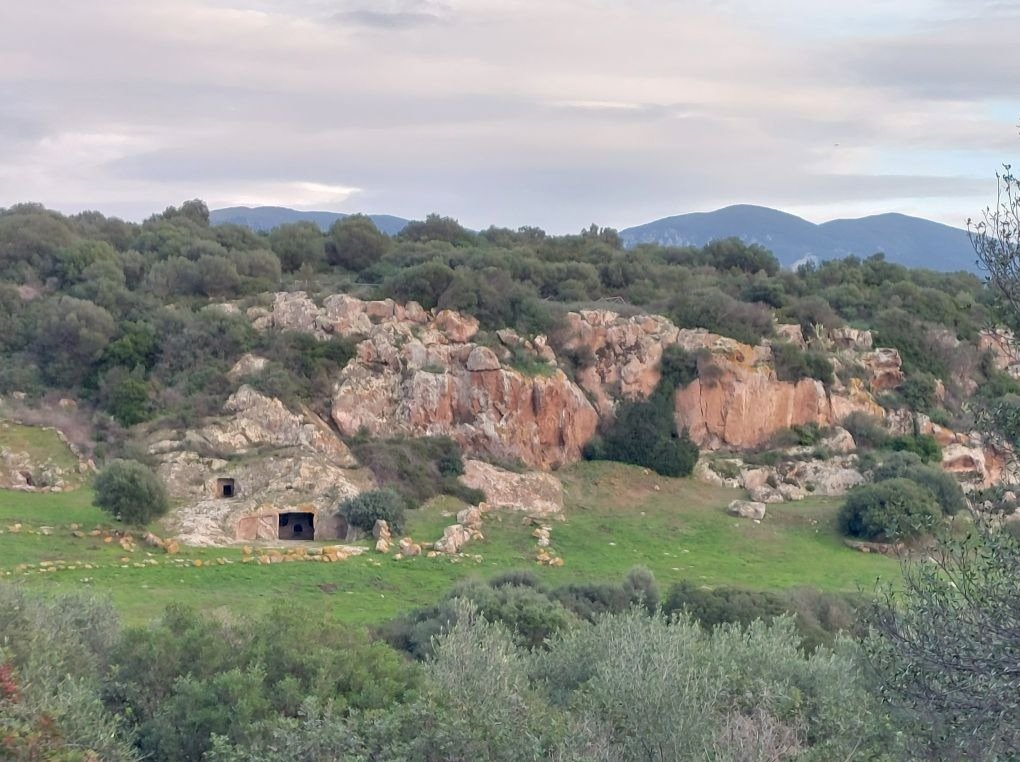
Montessu Necropolis, in the municipality of Villaperuccio. (photo: La Pintadera Sarda)
Here, a vast natural amphitheater carved into the rock awaits you, featuring dozens of domus de janas (rock-cut tombs), Mediterranean scrub scented with myrtle and mastic, and an untamed landscape that tells the story of thousands of years of history.
Visiting the Montessu Necropolis from La Pintadera Sarda offers an experience far beyond the typical beach day: a journey through time amidst domus de janas and the wild landscapes of Sulcis.
A Pre-Nuragic Site Recognized as a UNESCO World Heritage Site
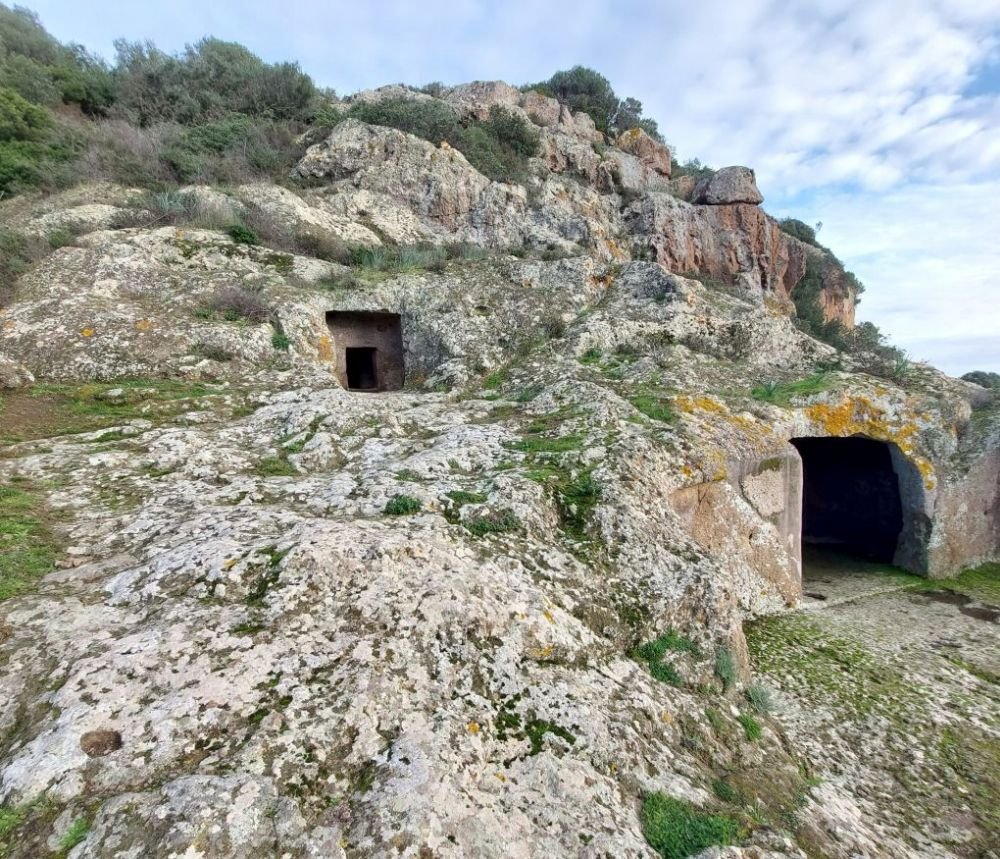
The Montessu Necropolis has become a UNESCO World Heritage Site. (photo: La Pintadera Sarda)
The Montessu Necropolis is located in Sulcis, within the territory of Villaperuccio, just a few kilometers from Carbonia. It is one of the largest Pre-Nuragic complexes in southern Sardinia, featuring over forty domus de janas carved into the trachyte rock and arranged within a natural amphitheater on Sa Pranedda hill, often aligned in a way that suggests a deliberate design.
The tombs vary in shape and complexity, ranging from basic single chambers to multi-cellular structures, including two monumental burials that appear to have served a “sacred” function. The site is adorned with sculpted symbols such as spirals and bull protomes, with certain tombs widely renowned for their decorations and tributes to the cult of the bull-god. Utilized from the Late Neolithic to the Early Bronze Age, Montessu bears witness to centuries of rituals and Mediterranean cultural exchanges.
Extensively studied since the 1970s, its artifacts are preserved in the museums of Cagliari and Santadi, and it achieved UNESCO recognition in 2025. The area also encompasses an archaeological park featuring a megalithic corridor tomb, two nuraghes, and two menhirs.
Untamed Landscape in the Heart of Sulcis Iglesiente
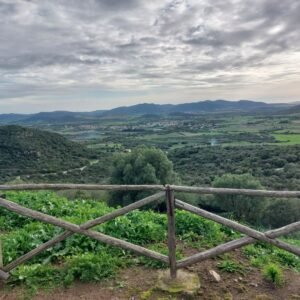
View from the Montessu Necropolis (photo: La Pintadera Sarda)
The Montessu Necropolis is nestled within a rocky amphitheater overlooking the plains of lower Sulcis, surrounded by rolling hills, cultivated fields, rows of vineyards, and the Mediterranean maquis climbing the slopes of Sa Pranedda.
The landscape is simultaneously gentle and wild: time-sculpted rocks, pathways winding through the brush, and a silence broken only by the wind and birdsong. It is the perfect destination for those looking to combine archaeology and nature, far from the main tourist crowds, in a slow and authentic atmosphere.
From the upper section of the site, the view opens up across the Sulcis countryside, revealing small villages, olive groves, and vineyards that reflect the deep-rooted agricultural traditions of this area in Southern Sardinia.
Plan Your Visit to Montessu from Carbonia (Click on the Map)
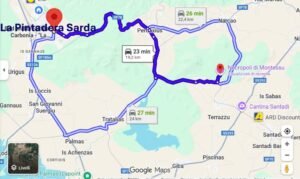
Route from La Pintadera Sarda to the Montessu Necropolis (photo: La Pintadera Sarda)
To make the most of your visit to the Montessu Necropolis, here are a few practical tips:
- Head out in the morning: the cooler hours are ideal for walking among the tombs and exploring the site’s trails.
- Wear comfortable shoes: the tour takes place on natural terrain, featuring rocks and minor elevation changes.
- Bring water, a hat, and sunscreen, especially during spring and summer.
Be sure to carve out some time for the nearby villages too (such as Santadi (SU) or Villaperuccio (SU)), perhaps for a traditional lunch or a local wine tasting.
Ask your host at La Pintadera Sarda for up-to-date recommendations on opening hours, tickets, and how to pair your visit with other archaeological or natural landmarks.